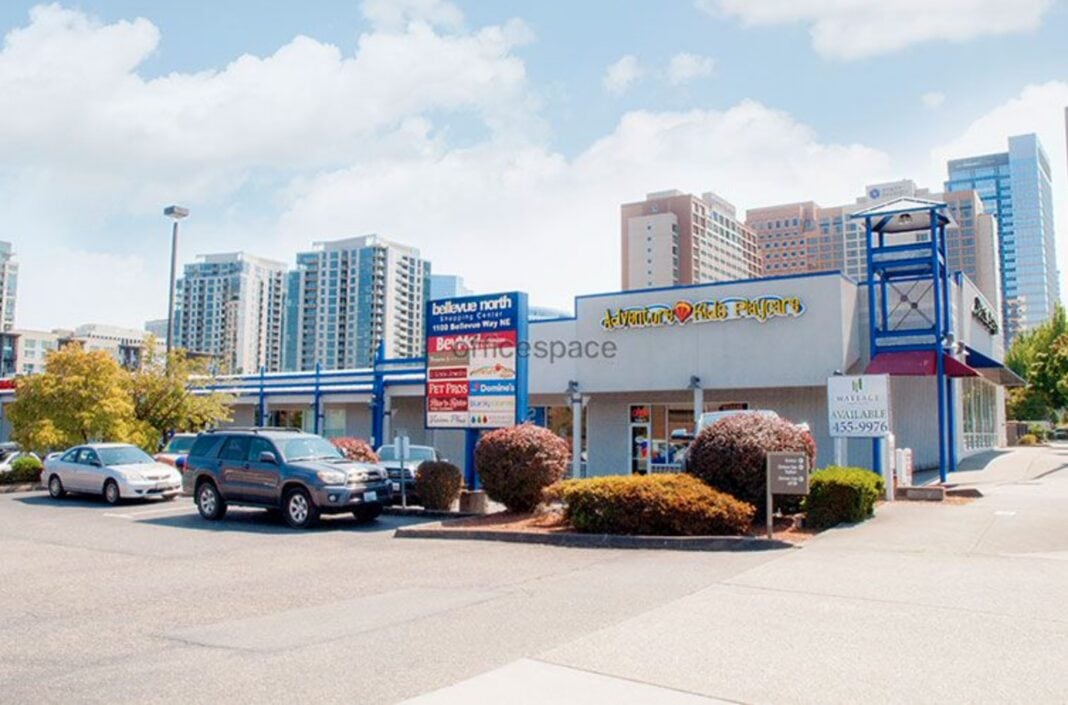

Bellevue is advancing a proposal that would reshape two obligations facing every business in the city: what it owes in local tax and what it pays to stay licensed. The City Council is expected to take up the package later this year.
Taken together, the changes would narrow the pool of businesses subject to city tax while replacing Bellevue’s flat, one-time business license with a recurring annual fee scaled to revenue.
The city gathered feedback from business owners over the summer through an online survey and a virtual session held July 30. Staff say a refined version will go to the Council for a vote.

What Would Change
Bellevue currently charges two business taxes, and some businesses owe both. One is levied on gross receipts — total sales, before expenses — at 0.1596 percent, or $1,596 on $1 million. The other runs $1.25 per square foot of occupied space, and calculating it means sorting a location into categories of space and applying an exemption formula tied to sales.
The proposal would have each business pay one or the other, with a dollar-for-dollar credit against the square footage tax for gross receipts tax already paid. Alongside that:
- The gross receipts exemption more than doubles, from $215,000 in annual sales to $500,000.
- The square footage threshold rises from 250 square feet to 2,500, putting a 1,200-square-foot coffee shop under the line for the first time.
- The square footage rate drops from $1.25 to $1.00 per square foot a year.
- The categories of space disappear.
The city expects the net effect to be roughly neutral for most businesses, since the licensing change adds back a cost the tax changes remove.

The License Would Renew Every Year
A Bellevue business license now costs a flat $119 and never expires. Under the proposal it renews annually, priced on revenue: free under $50,000 in sales, $50 up to $250,000, $150 up to $1 million, $350 above that.
The city says annual renewal would give it a current list of which businesses are actually operating. The one-and-done license has been one of the sharper contrasts with Seattle, which charges $73 to $3,210 a year depending on revenue and requires renewal.
The Cost Backdrop
The proposal landed days after the Washington Roundtable, a group of executives from large in-state employers, published a report with the consulting firm Kinetic West on what it costs to operate in Washington. “Prices We Pay: The Cost of Doing Business in Washington” is the second in a series; the first, in March, covered household spending.
- Drawing on interviews and financial records from 18 consumer-facing small businesses around the state — none in Bellevue — it lays out pressures that reach well past wages:
- Unemployment insurance, workers’ compensation, paid family and medical leave and payroll taxes add roughly 43 percent on top of base wages that already rank among the nation’s highest.
- Most small businesses hold triple-net leases, covering the landlord’s property taxes, insurance and maintenance. Commercial insurance premiums in Washington rose 69 percent between 2019 and 2024, so occupancy costs climb even when rent doesn’t.
- Washington is one of seven states that tax revenue rather than profit, meaning a business can owe tax in a year it loses money. The report puts the state’s tax competitiveness ranking at 45th, down from 33rd six years ago.
- Inflation in the Seattle-Tacoma-Bellevue metro area ran 4.5 percent for the 12 months ending in June, against 3.5 percent nationally.
In an Association of Washington Business survey this spring, 77 percent of small businesses reported shrinking margins and 75 percent said they had raised prices.
“Those rising costs show up in the prices families pay every day,” Washington Roundtable President Rachel Smith said in a statement accompanying the report.
Where Bellevue Fits
Most of what the report describes is set in Olympia and applies in Bellevue as it does anywhere else in the state. What cities control is where Bellevue has run cheaper. Its 0.1596 percent rate starts at $215,000 in sales, while Seattle’s runs 0.342 to 0.658 percent above $2 million. Bellevue has no equivalent of Seattle’s JumpStart payroll tax or its social housing tax, and its minimum wage is the state’s $17.13 an hour against Seattle’s $21.30.
Local business groups have pushed back on tax proposals repeatedly, including the Bellevue Chamber’s opposition to a state payroll tax that would have exempted Seattle, warnings from Bellevue business leaders about state increases, and a local banking executive’s read on what the state economy means for Eastside employers.
A Council vote is expected later in 2026. No date has been set.