
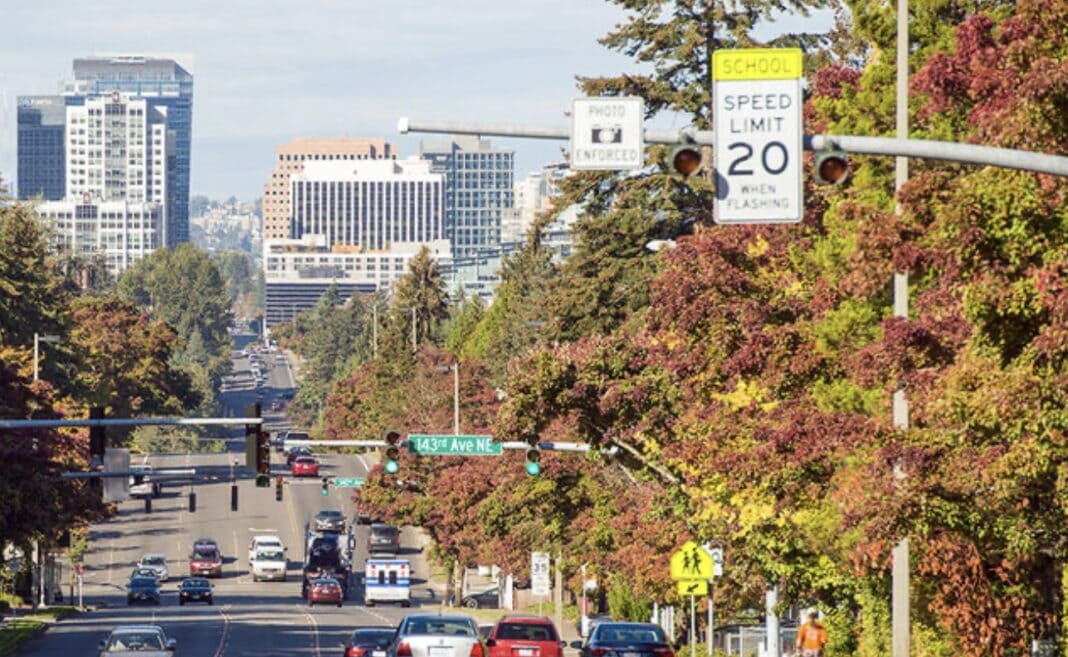
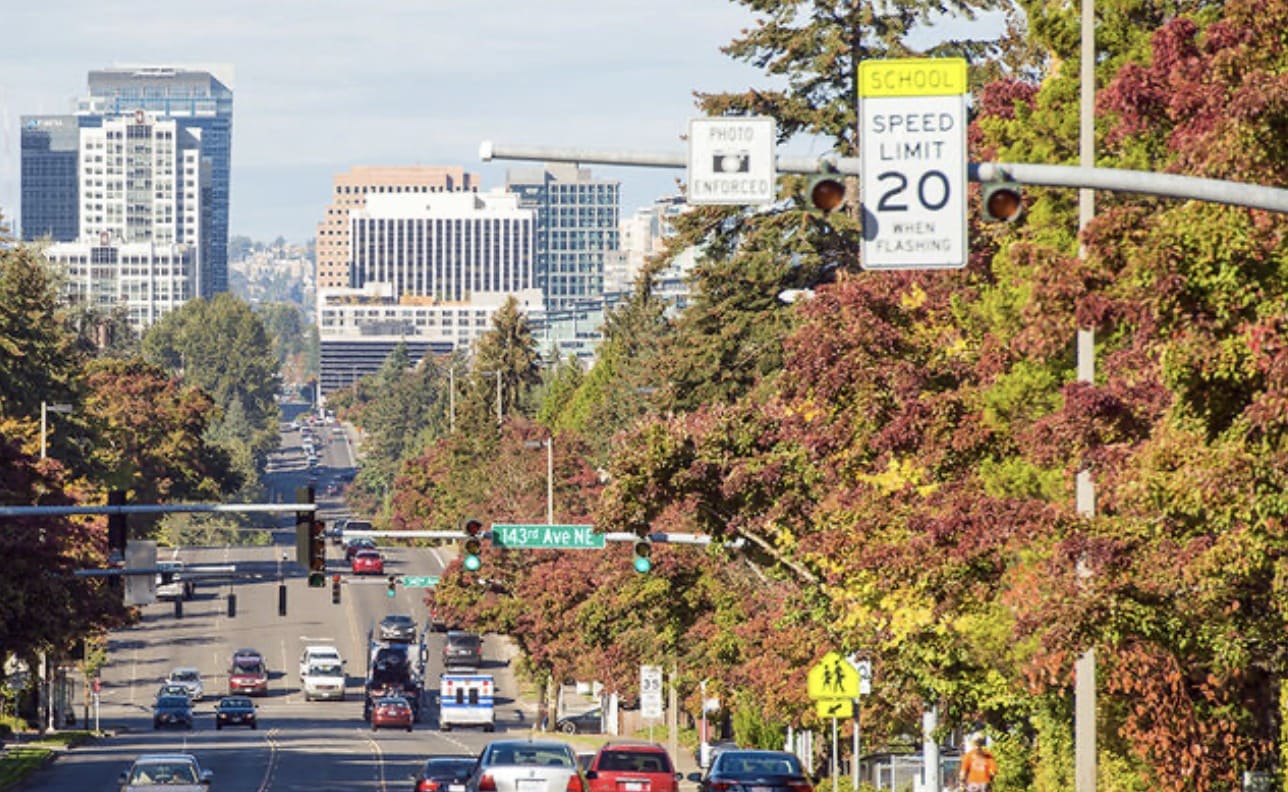
Bellevue is preparing to adopt its 2026–2045 Transportation Facilities Plan (TFP), a 20-year roadmap that outlines how the city plans to improve mobility for drivers, cyclists, transit riders, and pedestrians. The plan, expected to be approved in late 2025, identifies 70 transportation projects designed to expand roads and intersections, upgrade sidewalks, and add new bike and pedestrian facilities.
Much of the work will focus on high-growth areas including Downtown Bellevue, BelRed, and Eastgate, where population and business activity are projected to rise over the next two decades.
The TFP serves as a link between Bellevue’s long-term transportation vision and the city’s 6-year Capital Improvement Program (CIP), which funds specific projects. Updated regularly, the plan helps ensure that investments align with community needs and available resources.

Some projects fall under Impact Fee Programs, which allow the city to use fees from new development to fund infrastructure improvements. This approach helps maintain balance between growth and traffic demand.
Environmental factors are also part of the planning process. While roadway expansions can increase stormwater runoff and noise, they may also ease congestion and reduce emissions from idling vehicles. In addition, the plan calls for improvements to Bellevue’s pedestrian and bicycle networks to make active travel safer and more accessible.
The current TFP (2022–2033) was adopted in 2022. The upcoming 2026–2045 version builds on that foundation, preparing Bellevue’s transportation system for future growth while aiming to enhance safety, efficiency, and sustainability for everyone who travels through the city.









Sounds expensive.
Roadway expansion doesn’t reduce congestion. Widening roads correlates with increased vehicle miles traveled due to induced demand. People see there is more roadway, drive more often for longer distances, and quickly you’re back to the same level of congestion as you started with. This is referred to as the Fundamental Law of Road Congestion in urban economics. Nowhere has solved traffic congestion by adding more lanes
If the goal is to reduce emissions and vehicle miles travels, typically the best methods are to invest in alternatives (transit, active transportation), demand management, and lane reductions. Road expansions have the exact opposite effect, leading to more emissions, acid rain, and other negative environmental harms.
Ideally Bellevue should continue to invest in its bike network and implement some road diets, especially on the wide arterials surrounding it’s planned walkable mixed use districts (namely Northup and Bel-Red).
So now Bellevue wants to roll out this big “Transportation Facilities Plan” for the next 20 years, claiming it’ll make things better for drivers, cyclists, transit riders, and pedestrians. Sounds nice on paper — but seriously, who’s coming up with this stuff? It’s definitely not the homeowners. If it were, people would vote against half of these ideas in a heartbeat.
Let’s be real — who thought bike lanes made sense in a city full of hills? Go through BellRed or up 148th and tell me that’s bike-friendly terrain. Less than 1% of people here even use bikes to get around, yet somehow that tiny group gets to shape how the roads are built. Meanwhile, drivers have to deal with tighter lanes, more confusion, and more risks. And not everyone even knows how to ride a bike, so who exactly are we building this for?
Then there’s the whole “expand public transit” idea. Every time new transit hubs pop up, homelessness spikes around them — we’re already seeing it all over Bellevue. It’s frustrating that city leaders keep pushing this while ignoring what residents have been saying for years.
If the city really wants to improve transportation, maybe start by listening to the people who actually live here and drive these roads every day — not just a handful of planners and “mobility experts” who think Bellevue should turn into Seattle 2.0.
This plan will ruin Bellevue, guaranteed. It will be Seattle on steroids.