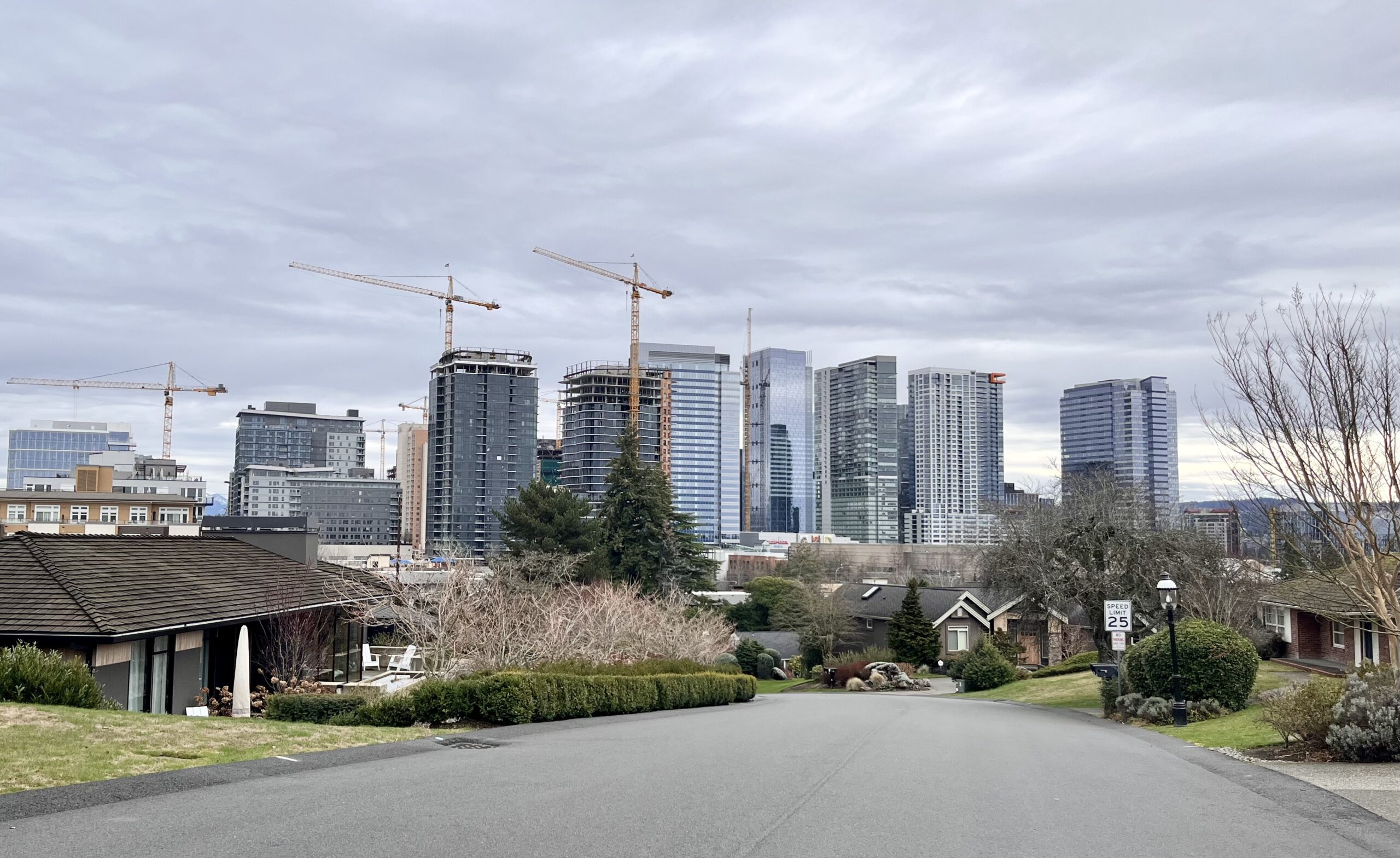
The Bellevue City Council has approved updates to its housing rules to comply with new state laws that require cities to allow more types of housing. The changes are intended to increase housing options in Bellevue and follow the passage of House Bills 1110 and 1337 by the Washington State Legislature in 2023. Cities were required to adopt these updates by June 30.
The new rules allow for what’s known as “middle housing” — such as duplexes, cottage courts, and small apartment buildings — in neighborhoods that previously only allowed single-family homes. These housing types have been limited for many years and are now being reintroduced to help address the region’s housing shortage.
Bellevue’s City Council held a final vote on the zoning changes after reviewing and adjusting the proposal earlier this month. The final version reduces some of the housing options originally proposed. For example, the number of homes allowed near light rail stations and RapidRide bus lines was scaled back to six units per lot, matching state requirements. Earlier drafts of the plan had proposed allowing up to nine units in those areas.
The Council also removed plans to allow six-unit housing near frequent (non-RapidRide) bus lines and neighborhood business districts like Crossroads and Eastgate.
Other updates include:
- Lowering the maximum building height for most middle housing.
- Placing limits on the size and height of cottage housing.
- Keeping current parking requirements, except near major transit stops.
- Allowing developers to pay a fee in exchange for building up to six units.
- Counting detached accessory dwelling units (like backyard cottages) toward the total number of units allowed on a property, while attached units (like basement apartments) do not count toward that total.
Bellevue’s original housing proposal was one of the most ambitious in the region but was gradually scaled back during the review process. The final version still goes beyond the minimum required by state law in some areas, but reflects compromises made after public input and City Council discussions.
The updates are part of a broader statewide effort to address housing affordability by increasing residential density in urban areas. Similar changes have been approved in other cities, including Seattle. As the Eastside’s largest job center, Bellevue’s updated zoning is expected to play a key role in expanding local housing options.