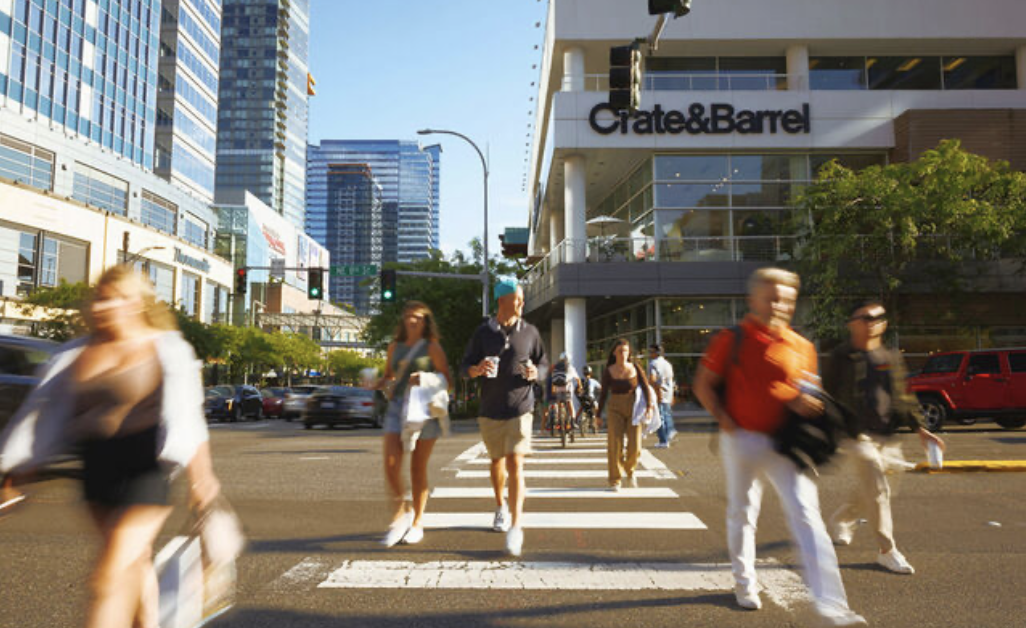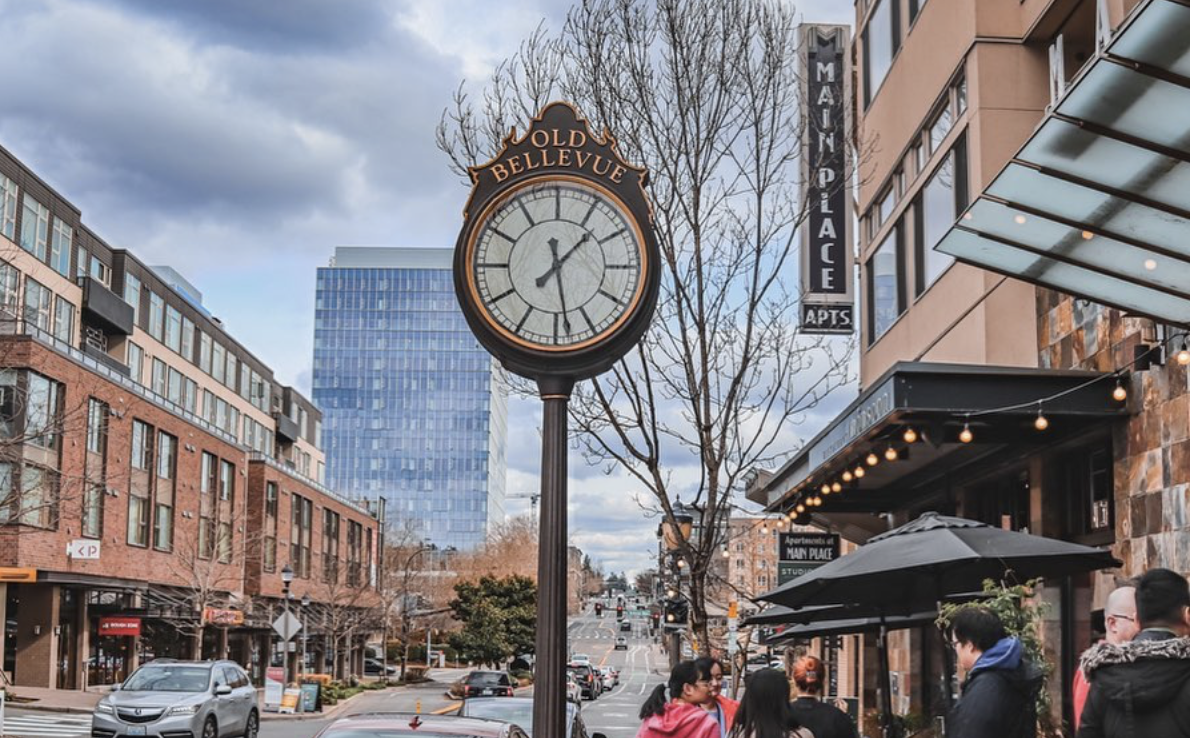

The City of Bellevue is preparing to introduce paid street parking in several high-density neighborhoods, ending its longstanding practice of free curbside parking.
The Bellevue City Council recently approved an ordinance establishing a new curb pricing program that will apply to areas including Downtown, Wilburton, BelRed, and the Spring District. Under the plan, hourly parking rates will vary between $1 and $8 depending on demand and location.
City officials have not announced when the program will begin, though parking signs and payment technology are expected to be installed before enforcement starts.

Bellevue plans to use a demand-based pricing model similar to Seattle’s, with rates adjusted to help maintain parking availability. The city’s transportation department will oversee the system with a goal of keeping roughly one or two parking spaces open per block, equivalent to an 80% occupancy rate.
According to the city, growing demand for curb space in busy districts has contributed to congestion, particularly in areas such as Old Bellevue and the Spring District during peak evening hours. Officials also reported that about one-quarter of drivers exceeded posted parking time limits, creating additional traffic and delivery challenges.
Revenue generated from paid parking will go toward program-related expenses including installation, maintenance, and enforcement, as well as future transportation planning efforts. City leaders have also expressed interest in expanding Bellhop, Bellevue’s free on-demand shuttle service.

The curb pricing initiative is part of a broader planning effort launched by the City Council in 2022 to modernize how Bellevue manages curb space as development continues across the city’s growth corridor. That work included updates to the city’s Comprehensive Plan, Downtown Subarea Plan, and a long-range Curb Management Plan focused on neighborhoods experiencing rapid growth.
Beyond paid parking, the city’s curb management strategy also prioritizes space for ride-share drop-offs, deliveries, bike access, electric vehicle charging, transit connections, food trucks, and outdoor dining uses such as parklets.