
The City of Bellevue is moving forward with a proposal to introduce a pricing-based curb management system, a shift that could change how on-street parking and curb space are used across the city’s most active neighborhoods.
The proposal, titled the Curb Pricing Program, is a city code amendment that would update Bellevue City Code Title 11 (Vehicles and Traffic). If adopted by the City Council, the ordinance would formally establish paid parking definitions, set geographic boundaries for paid parking zones, and create a framework for setting and adjusting parking rates and hours over time. Authority to make those adjustments would be delegated to a City Manager designee.
The proposal stems from a broader policy effort initiated by the City Council in February 2022 to modernize Bellevue’s approach to curb management. That effort included updates to the city’s Comprehensive Plan and Downtown Subarea Plan, as well as the development of a long-range Curb Management Plan (CMP).

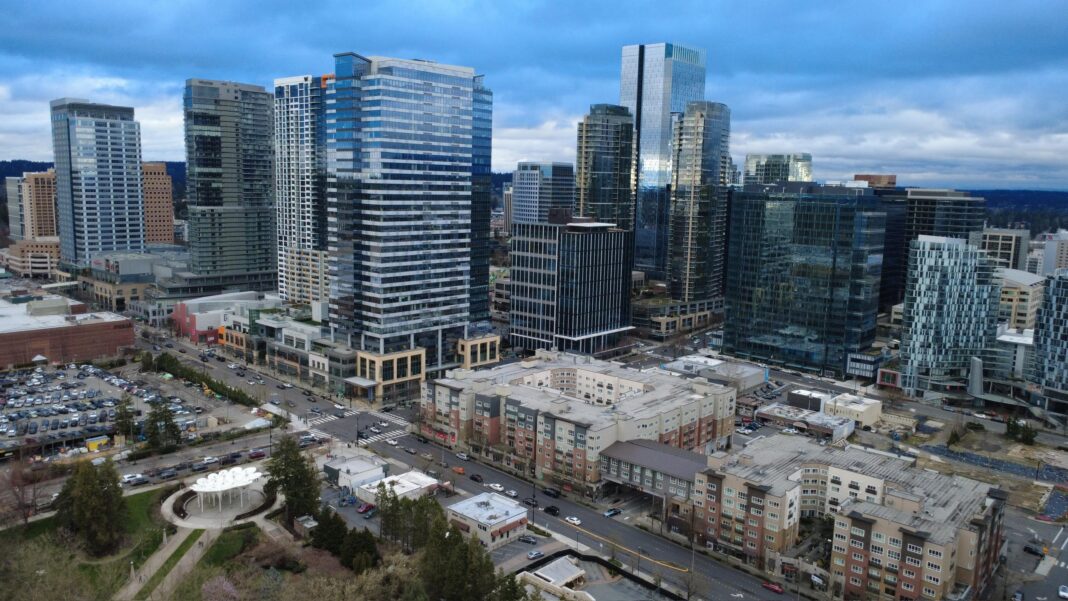
At its core, the CMP is designed to address increasing demand for limited curb space as Bellevue continues to grow, particularly in dense, rapidly developing areas. The plan focuses on neighborhoods within the city’s “Growth Corridor,” including Downtown, BelRed, the Spring District, East Main, and Wilburton.
Under the proposal, the curb is defined more expansively than just the edge of the street. It includes three zones: the curb zone (used for parking, travel lanes, and loading), the furnishing zone (which may include trees, lighting, and street furniture), and the sidewalk zone for pedestrian movement. The CMP outlines how these spaces could be more intentionally designed and managed.
A key component of the proposal is the introduction of pricing as a tool to manage demand. Paid parking and other curb-related fees would be used to better balance supply and demand over time, rather than relying on fixed or ad hoc regulations. The city indicates that pricing could apply not only to parking but also to uses such as shuttle permits or commercial loading.

In addition to pricing, the plan outlines a broader strategy to prioritize different uses of curb space. This includes accommodating passenger pick-ups and drop-offs, delivery vehicles, bike access, electric vehicle charging, and transit connections. It also allows for flexible uses such as on-street dining, parklets, and food truck activity in certain locations.
City officials say the goal is to create a more consistent and coordinated system for managing curb space, which is currently handled in a more fragmented way. The proposal emphasizes aligning curb use with surrounding land uses, improving safety and accessibility, and supporting economic activity.
The plan also calls for the use of new technologies to improve efficiency and safety, as well as a more data-driven approach to decision-making. By managing curb space at both the block and network level, the city aims to respond more effectively to changing conditions, including population growth and evolving transportation needs.
According to the city’s environmental review conducted under the State Environmental Policy Act (SEPA), the proposal is not expected to result in significant adverse environmental impacts beyond existing conditions.